Porthleven Prize (continued)
Second Residency
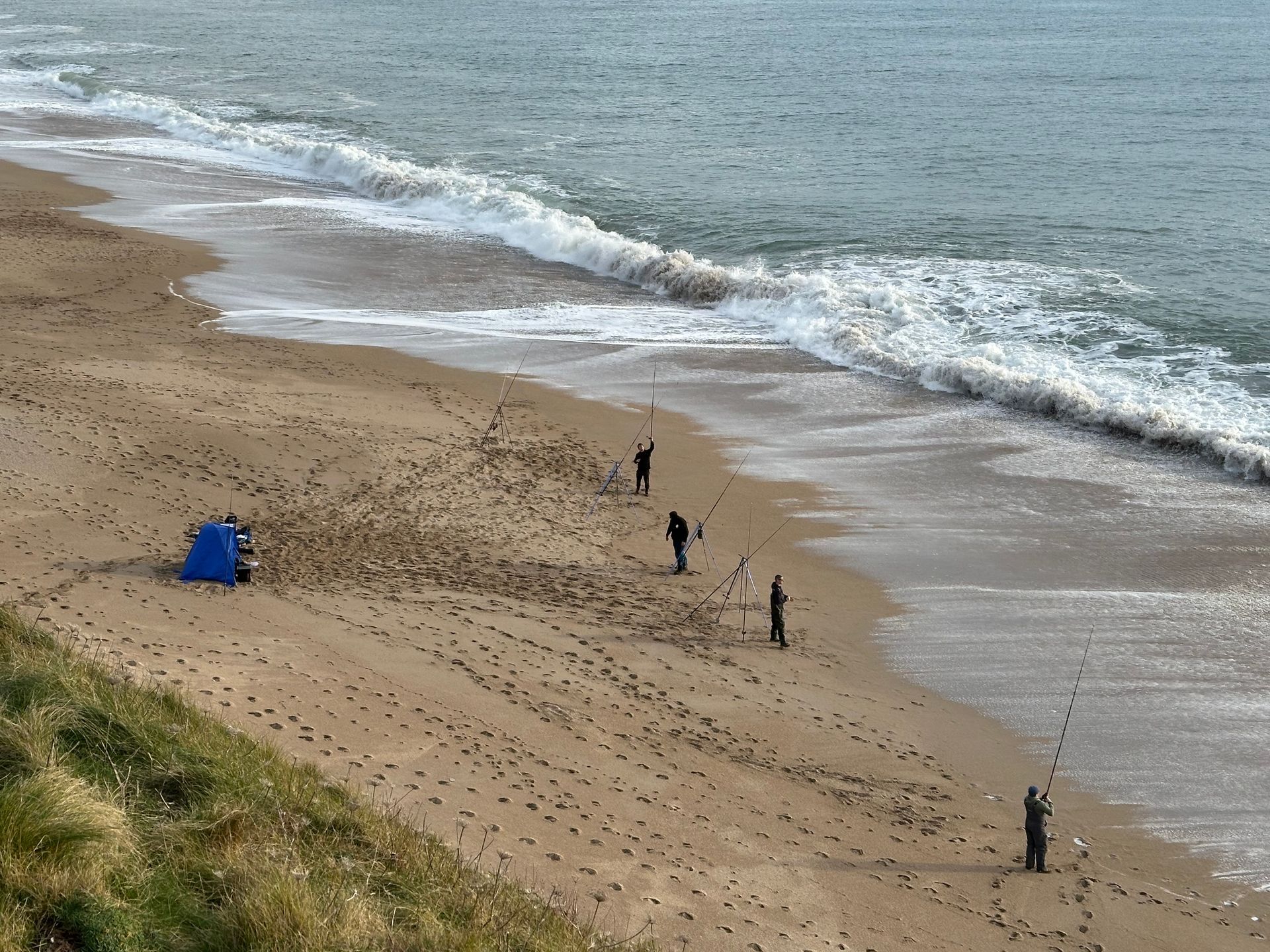
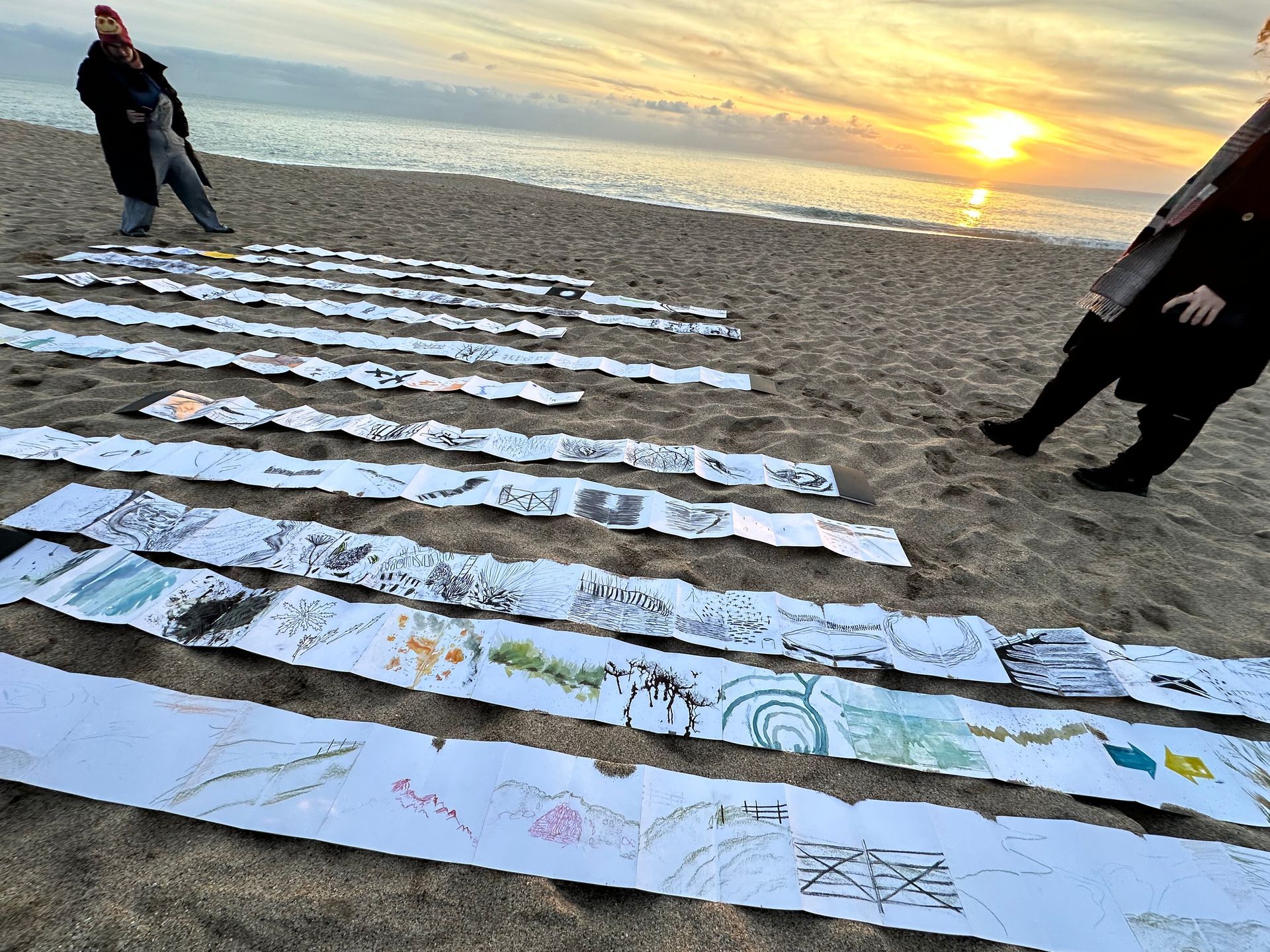
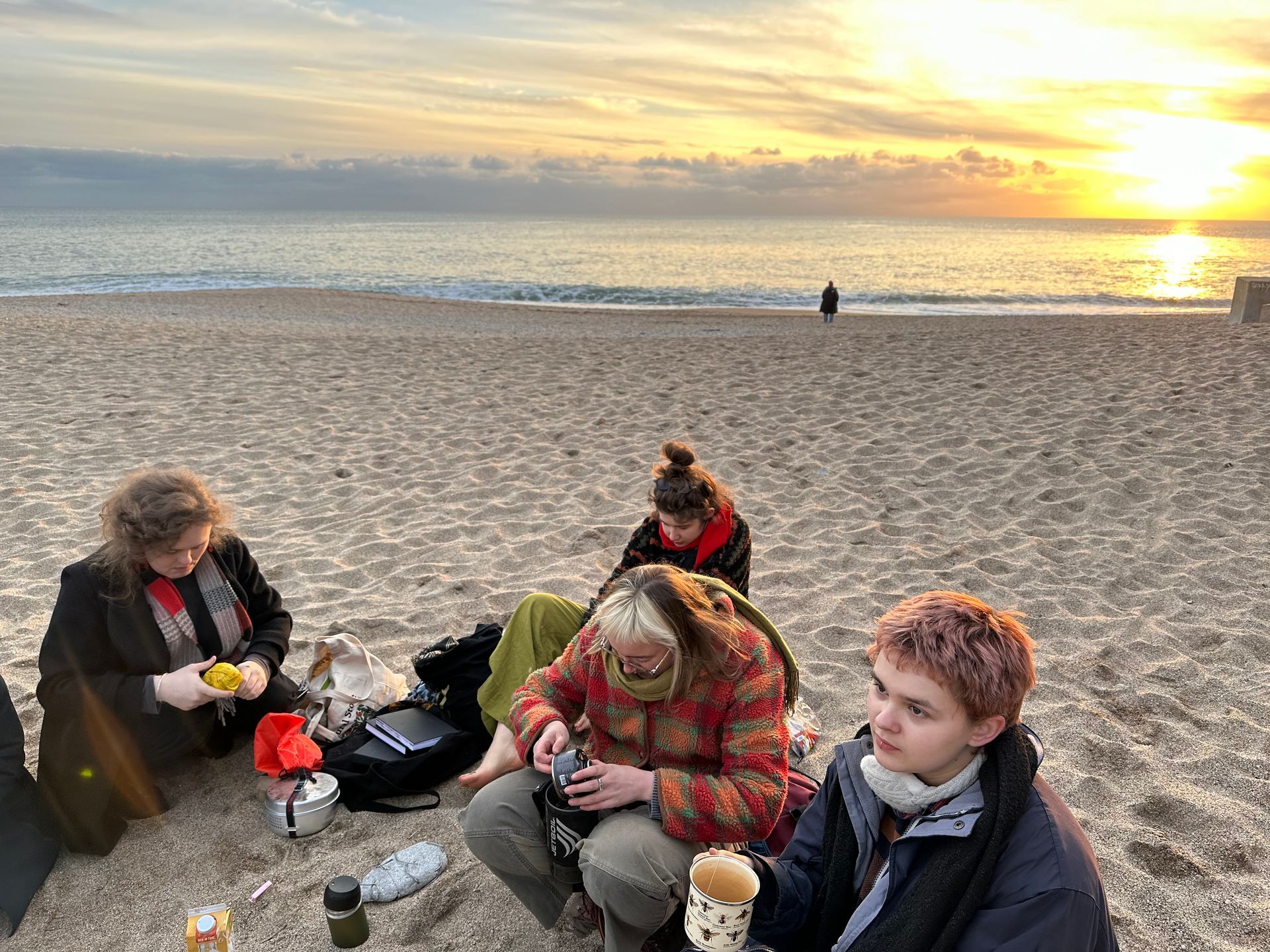
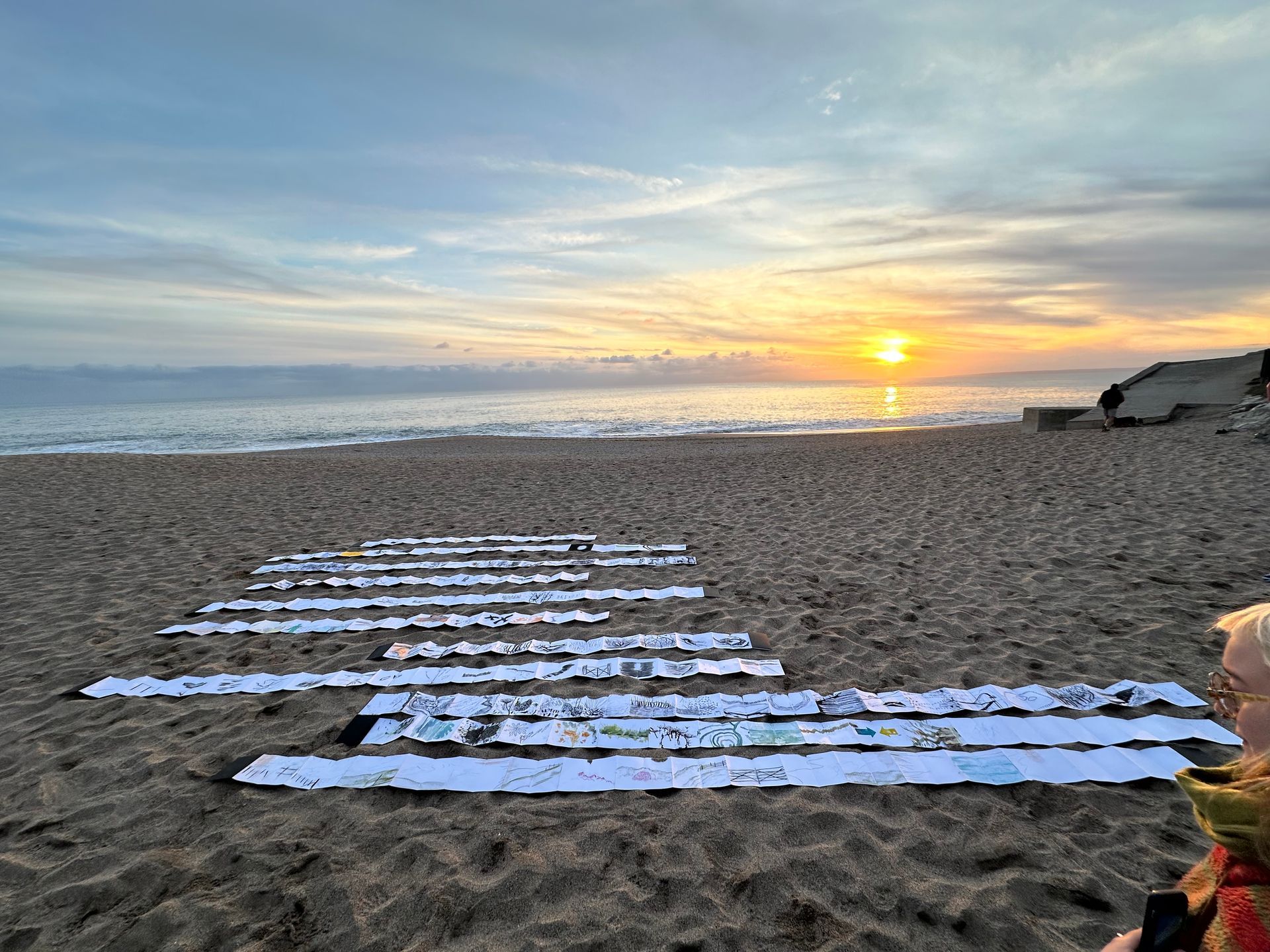
The second residency in Porthleven was in March (a bit warmer!) for two weeks. This was also jam packed with a history work, poetry and singing, led by different Bath Spa staff (past and present). We went for walks, drew, took part in St Piran's Day and even made some films (Cold Scalp and Stars).
After the second residency, it was back to my MA work but always with an eye on finishing work that would be shown in the lighthouse or harbourside. I had to get to grips with two new skills: 3D printing and electronic engineering. Luckily, for the former, I got plenty of help from Lara and Owen to get both the large and small lemon and limes printed.
For the electronic components for the Tekno telephone, I watched a lot of YouTube videos and did a lot of soldering. The challenges included making the sounds loop (or not) along with the simple logistics of making the telephone suitable for use i.e. clearing out the old electronics and fitting 3 boards inside.
The lemon and lime also proved tricky. We had to print each in two (lemon) or four sections (lime) due to the bed size of the 3D printers. But even harder was glueing the pieces together. As they were so thin and we'd not built in any overlap I had to use a lot of silicone sealant. It went everywhere! You can see the unlit results in a couple of pages.
Porthleven Exhibition
Preparation
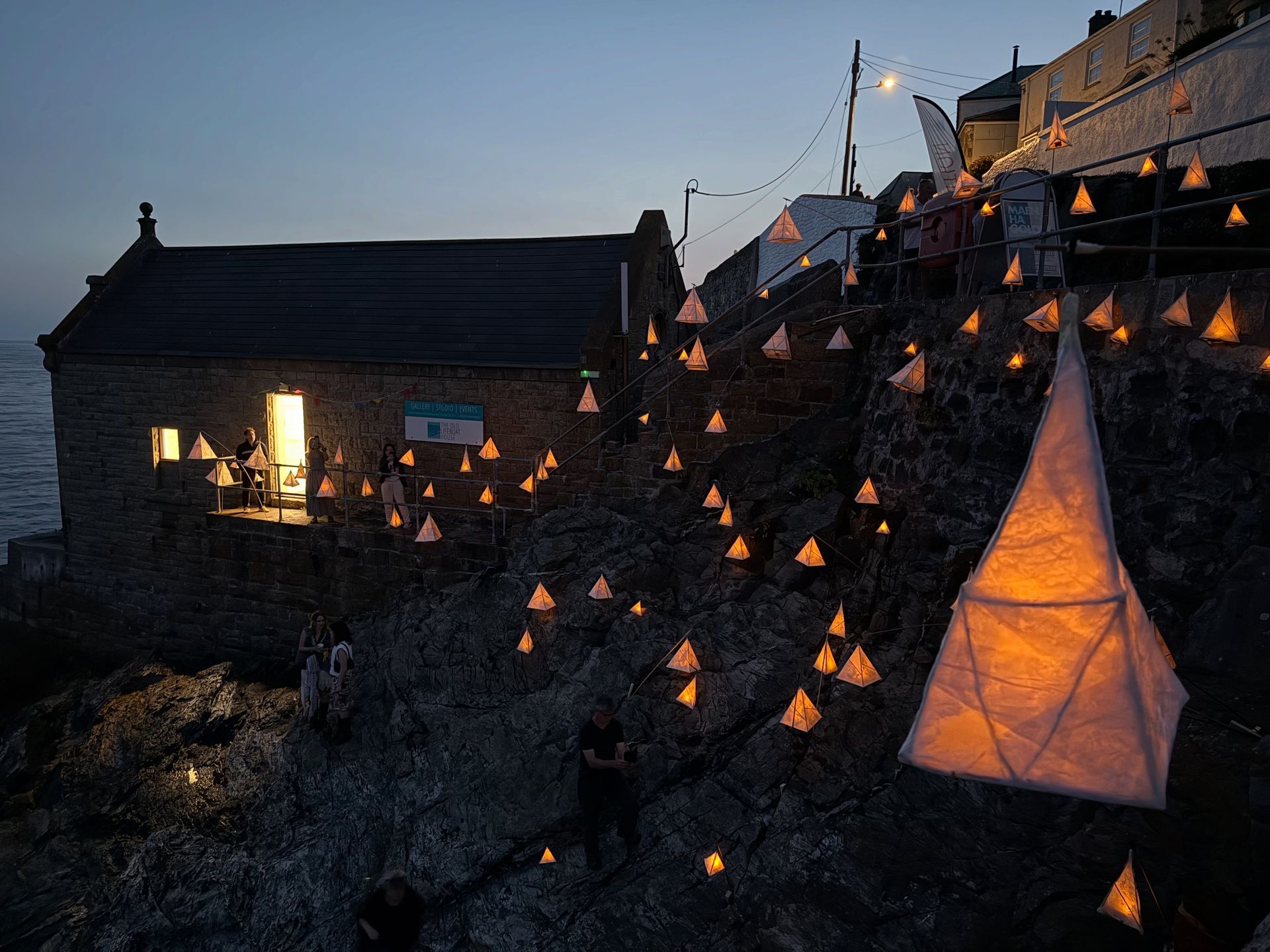
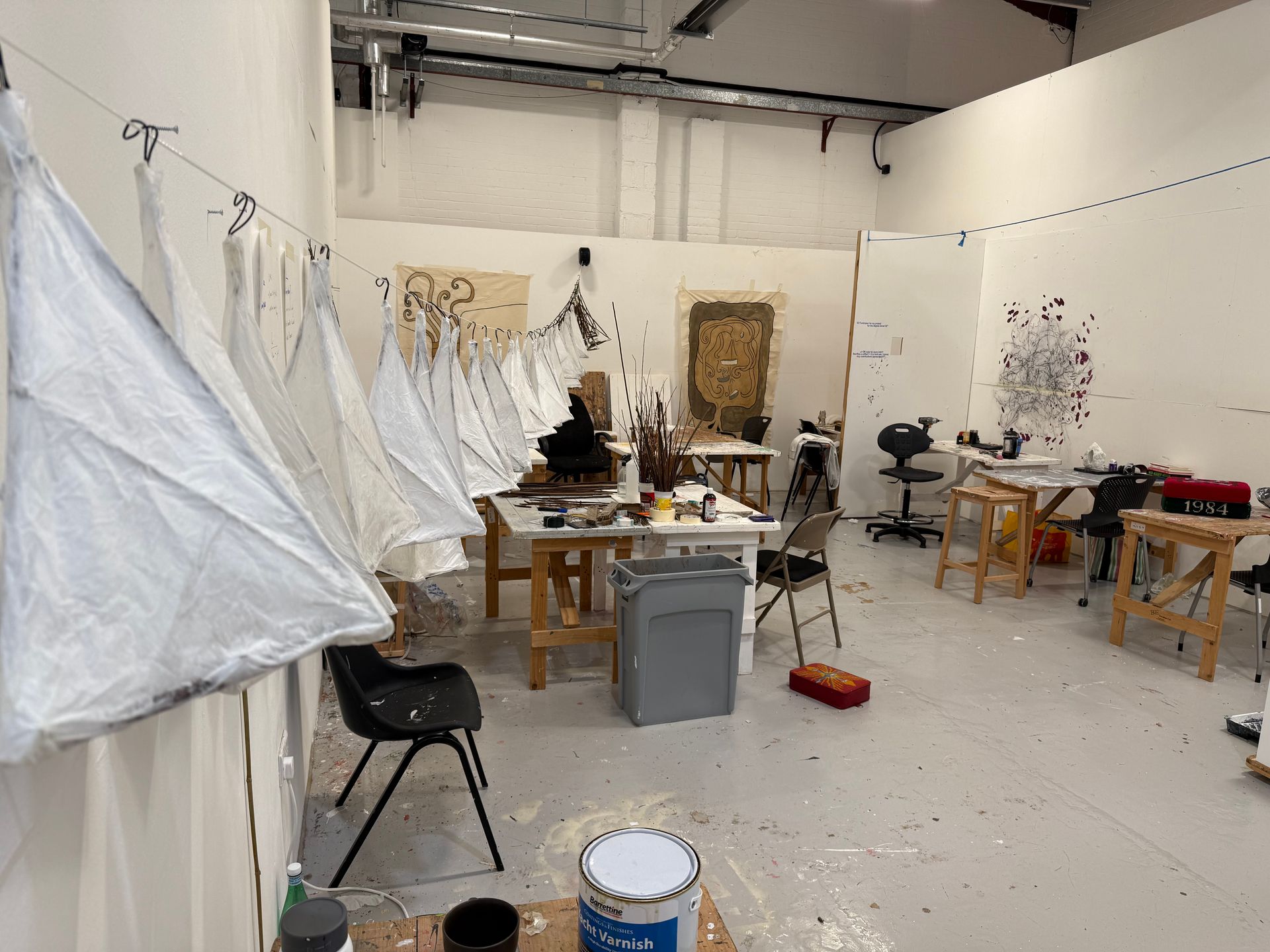
Following our selection for the second part of the Porthleven Prize, we had to get busy designing and making work that would be exhibited in Porthleven. One of the major undertakings was the making of over 150 lanterns to represent the lives saved by the RNLI in and around Porthleven. These lanterns were later sold and donations given to the RNLI.
We were given a space at the Summix building opposite the Locksbrook Campus. The other winners were Ella Moorhouse, Emma Davies, Grace Green, Jen Hamblin, Nadja Cudworh, Ru McKay, and Willow Pugh. Florien Hazenberg was our curator. Kellie Hindmarch (Course leader - Photography) was the academic lead with Simone Hesselberg the project manager.
Below you can see some of the works in progress.
Marketing
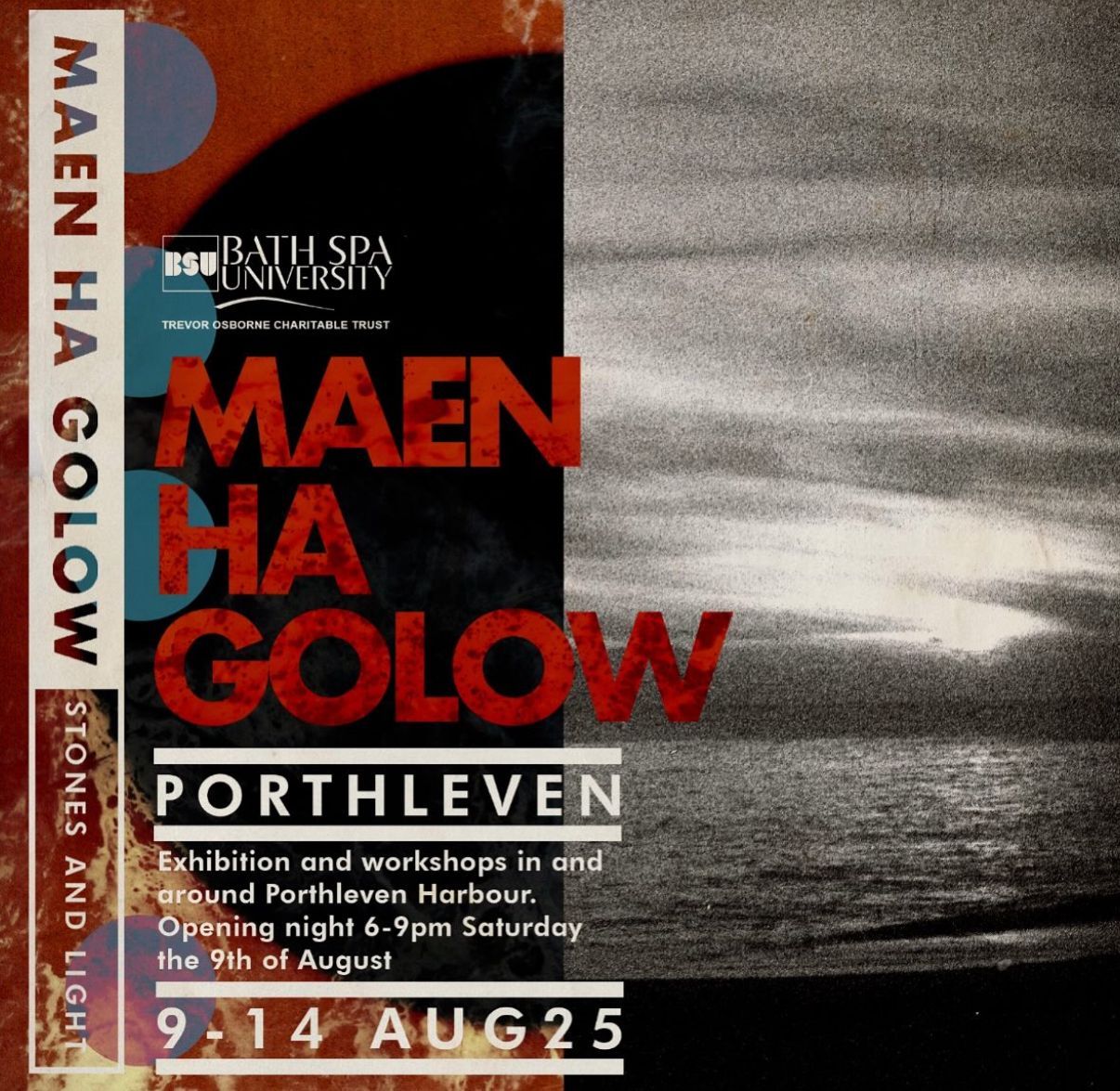
Ru McKay made all the posters for the two shows, even personalising them with our own artwork.
The Lighthouse
Here is the view from the balcony in the lighthouse. Nadja's piece is on the plinth in the middle.
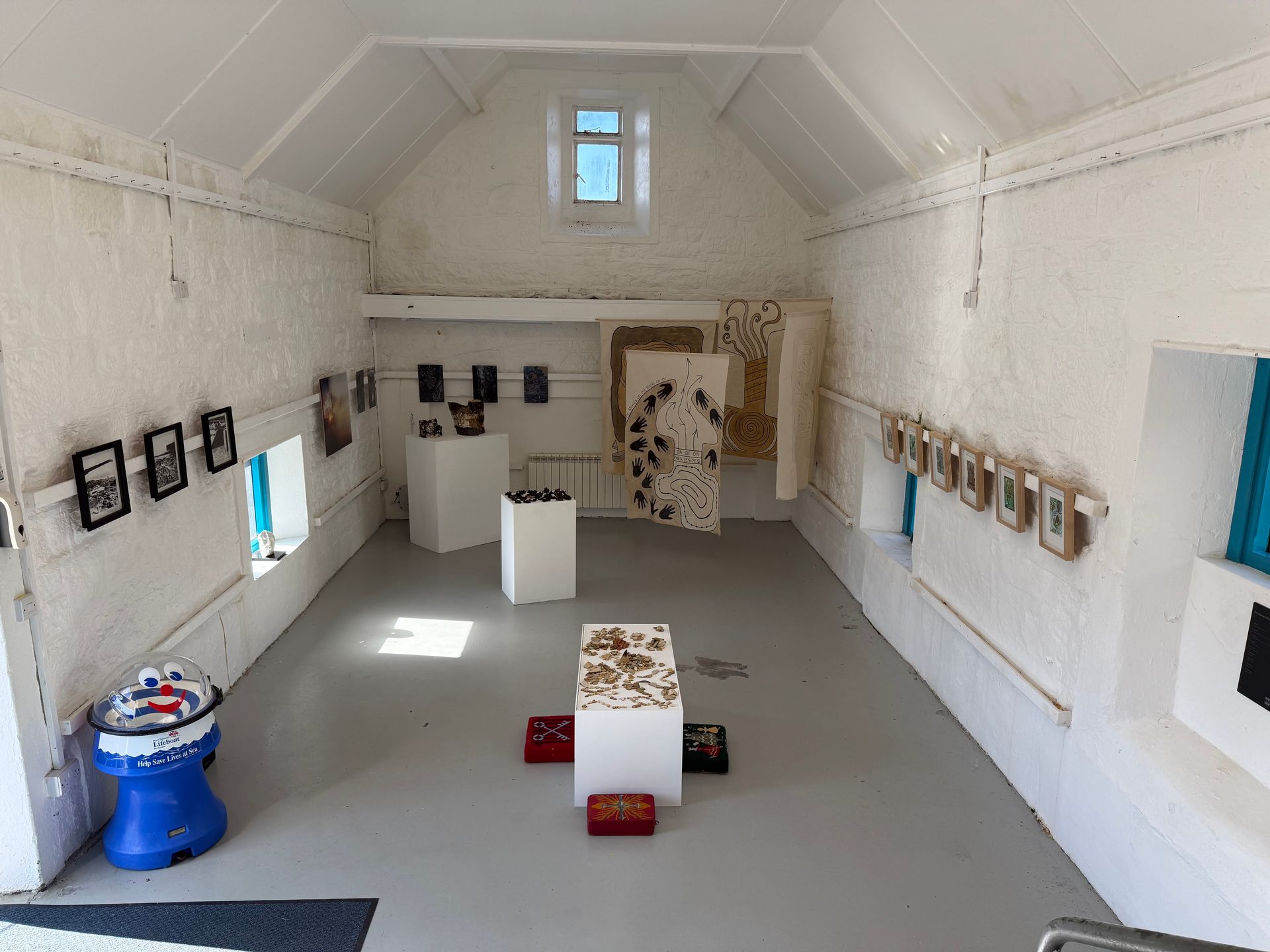
The lighthouse was the epicentre of the art show which ran for a week in the town. Inside the building were artworks from each of the 8 students. Most of my work was outside but I did have 2 art pieces, the sound piece, 'To the sea and back', and the rock piano, created with Emma Davies.
My work in the Lighthouse
My work in the lighthouse consisted of two main pieces. The first was a 3-minute piece that imagines a walk from the Harbour office to the end of the pier then back again. The sound of the sea gradually rises then falls. It has a number of field recorded samples that repeat throughout e.g. a dog barking, a truck reversing. It is in the style of Brian Eno's seminal record, On Land.
This is the display on the balcony of the lighthouse. The piece, 'To the sea and back', played on the little music player on the left-hand side of the picture (and below):
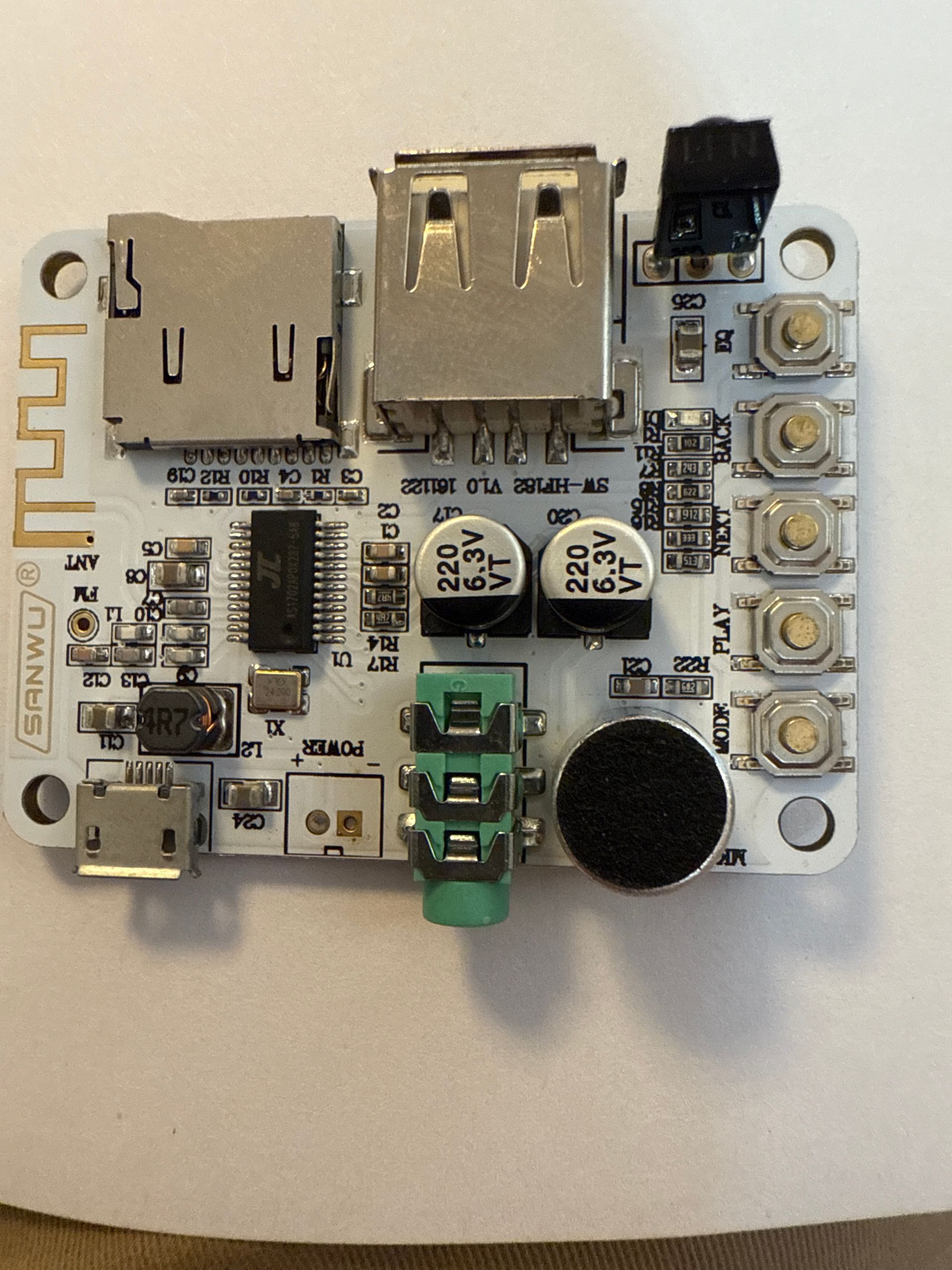
This is the full setup:
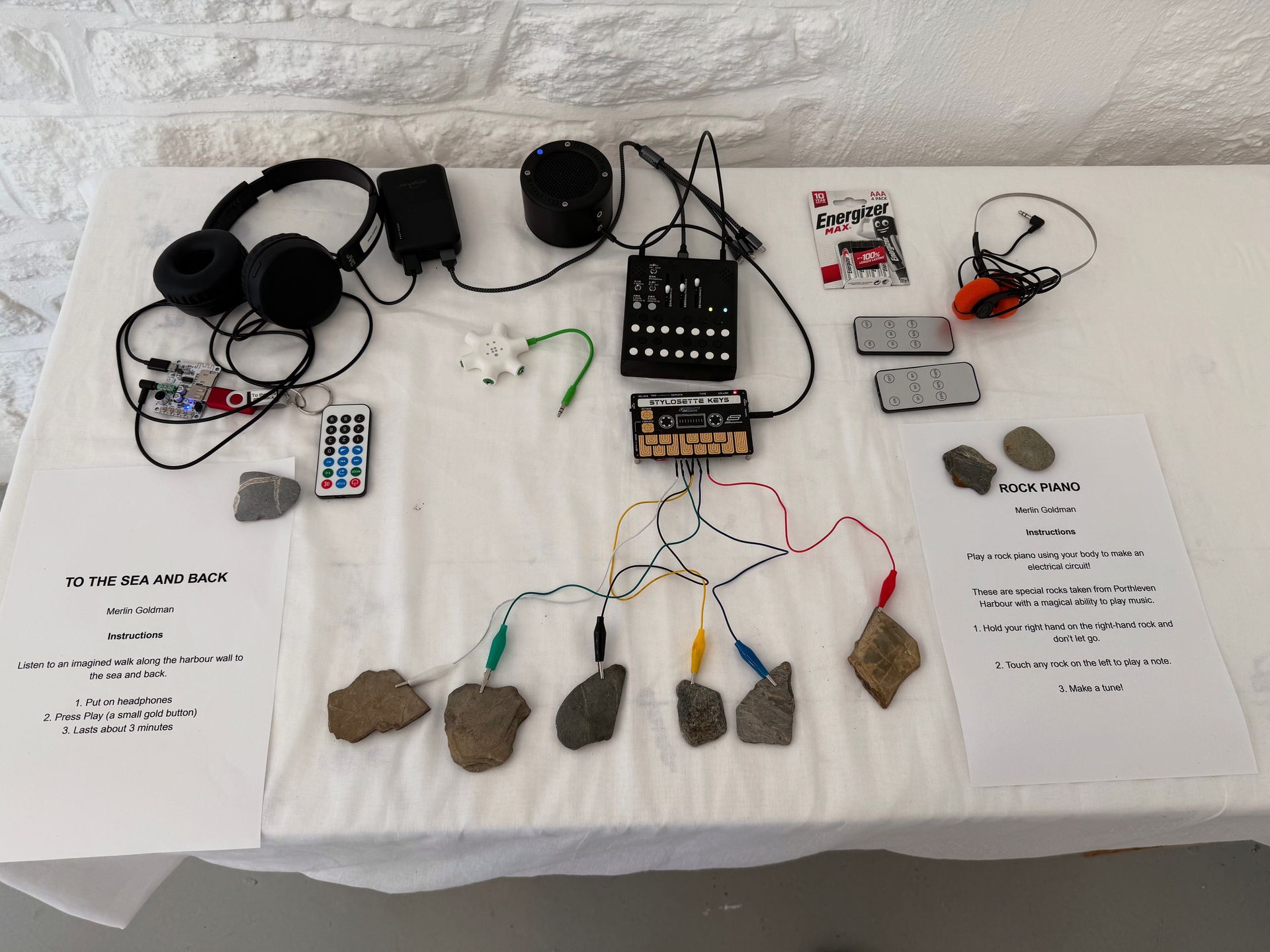
On the right hand side is the rock piano. It consists of a stylophone attached to a Wingy attached to a MiniRig speaker. The stylophone is played using the rocks attached by crocodile cables. The piano is played by holding the rock attached to the red cable (on the far right) while at the same time placing your left hand on one of the other rocks to play a tone.
On the next page, you can find more about the outdoor artwork.
The Porthleven Prize was funded by the Trevor Osborne Charitable Trust and Bath Spa University.